A bit about the song..
While I didn't write the lyrics, I composed and produced the entire instrumental for this track. It was a fantastic learning experience, marking my first-ever cover song. The project actually began as a slow, somewhat dull arrangement, but everything shifted the moment I introduced the drums. That rhythmic energy completely transformed the vibe into something vibrant and upbeat, and from that point on, the "magic" really took over and guided the rest of the production.
One of the most challenging aspects of this project was achieving a competitive mastering loudness in Ableton, which is a skill I’m still refining. I found that sidechaining the vocals to the instrumental was a game-changer, allowing the voice to cut through the mix with much more clarity. This is a song I've always loved, so I decided to take a "why not" approach and see what I could create; through that process, I gained a ton of experience with vocal chopping, precision timing, and the power of layering to build a professional, full-bodied sound.
Check out this YouTube Short featuring my pop-rock cover of Chris Brown’s "Don't Judge Me"! I posted this sneak peek earlier this March, and even as a work-in-progress, the production is already gaining serious traction. You can definitely feel the energy in this new direction—give it a listen (below) and let me know your thoughts!
From Intimidation to Innovation: My 90-Day Journey Covering Chris Brown’s "Don’t Judge Me"
We’ve all been there—standing at the base of a mountain, looking up at a masterpiece, and wondering how on earth we’re supposed to climb it. For me, that mountain was Chris Brown’s "Don’t Judge Me."
When I first decided to take on this cover, I was paralyzed. Let’s be real: Chris Brown has a world-class team. He has engineers who have spent decades behind the board, high-end studios with acoustic treatment that costs more than my car, and a collaborative environment designed for perfection. As a solo producer working in a 400-square-foot space, "intimidated" was an understatement.
But over the last 90 days, that intimidation turned into something else: wisdom.
The Beginner’s Mindset at 37
I’ve been making music since I was 15, but at 37, I’ve had to learn the hardest lesson in the industry: patience. In my teens, I wanted everything out now. I’d rush a track, slap it together, and wonder why it didn't sound like the radio.
Today, I’m in a different season of life. I’m currently living in transitional housing, getting back on my feet, and preparing to move into my own apartment soon. My current "studio" has no carpet and no acoustic foam; the reverb just bounces off the walls. But instead of letting that stop me, I’ve embraced a "beginner’s mindset." I’ve realized that I have to take my time. I’ve gone through countless iterations of this track—from slow, stripped-back ballads to the high-energy pop-rock version I’m working on now.
Breaking Down the Basics: 88 BPM and E Minor
The breakthrough started when I stopped looking at the "masterpiece" and started looking at the math. I opened Ableton and went back to the studs:
Tempo: 88 BPM
Key: E Minor
That tempo is deceptive. At 88 BPM, you’re in "Celine Dion territory"—those massive, slow-burn ballads where the vocals have nowhere to hide. I’ll admit, I didn't think I had the voice for it. But everything changed when I introduced the drums. As soon as that pocket was established, my timing tightened. I wasn't just singing into the void anymore; I had a heartbeat to follow.
The DAW Dilemma: Ableton, Logic, and the Ghost of Mixcraft
My journey through software has been a long one. I remember being 16 and buying Mixcraft at Office Depot—a simpler time! Since then, I’ve cycled through FL Studio, Logic (which is still "sick," for the record), and BandLab.
While I love BandLab for its incredible vocal presets, its workflow can be a bit clunky for complex tracking. I eventually found my "home" in Ableton. There is something about the way it handles consolidation (shoutout to Cmd + J) and resampling that just clicks. By bouncing tracks in place, I stopped staring at a mess of vocal chops and fades and started looking at clean, manageable audio files. It lowered my stress and let me focus on the mix.
The Science of the "Pocket"
The biggest "aha!" moment came from studying frequency charts. I’m a bass/tenor, which means my voice lives comfortably between 100 Hz and 5000 Hz. In music production, real estate is limited. You can’t have every instrument fighting for the same space in the frequency spectrum, or you end up with "mud." I’ve had to learn the "Keep It Simple, Stupid" (KISS) principle. In my pop-rock version, the drums are the engine. I’ve started using sidechain compression to ensure that everything bows down to the vocals and the kick.
What’s Next?
This project has taught me that you don’t need a million-dollar studio to make something meaningful. You need to understand EQ, you need to respect the frequency spectrum, and more than anything, you need the discipline to not release it until it's right.
I’m still learning. I’m still figuring out how to make that one specific kick drum shine like the pros do. But as I prepare to move into my new apartment (hopefully with carpet this time!), I’m moving forward with a confidence I didn't have 90 days ago.
I posted to INSTAGRAM
I posted this cover song to instagram and people seem to like it.
The "Preset" Trap: Moving from BandLab to Ableton Pro
One of the most interesting parts of this 90-day deep dive was my "software tug-of-war." For a while, I found myself bouncing back and forth between BandLab and Ableton, and it taught me a lot about where I am as an artist.
BandLab is fantastic for one thing: instant gratification. Their vocal presets are excellent—they make you sound "produced" the second you hit record. But as I dug deeper into the Don’t Judge Me cover, I realized that presets are a double-edged sword. They give you the "shimmer," but they don't give you the structure.
I found my vocals were "all over the place." I had hundreds of tiny clips, messy fades, and timing issues that a preset just couldn't fix. That’s when I had to put away the "easy" tools and get surgical with Ableton.
The Power of Consolidation
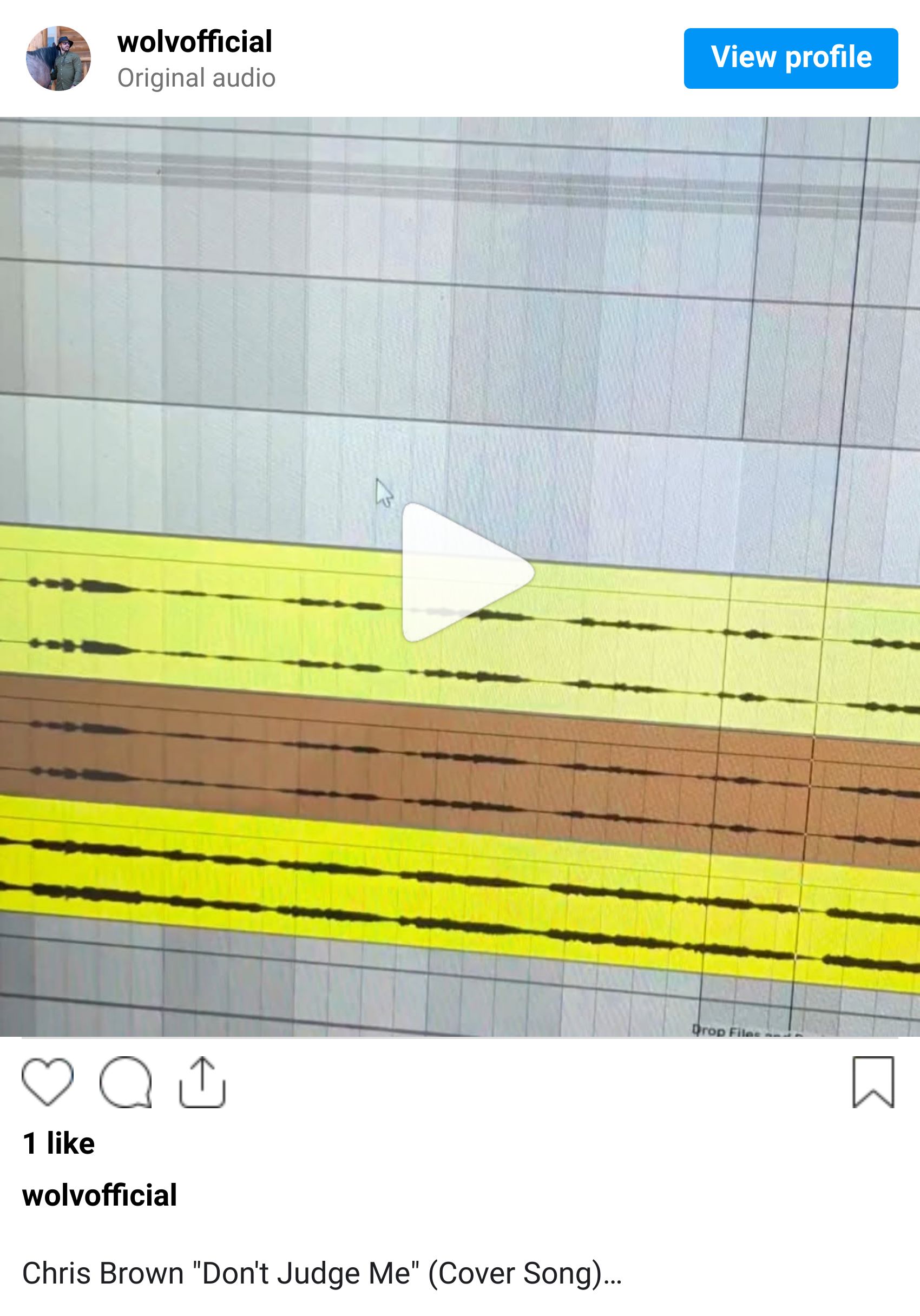
In Ableton, I discovered the magic of the Command + J (Consolidate) prompt. It sounds like a small technical detail, but for a producer, it’s a mental game-changer. By consolidating my vocal layers and then "bouncing in place" or resampling them to a new track, I was finally looking at a clean slate.
Instead of a screen full of "vocal chops" and stressful visual clutter, I had solid audio files. This allowed me to:
Stop Busing Everything: I actually stopped using traditional buses for a moment and gave each consolidated track its own specific Reverb and EQ.
Layer with Intent: I could have one "dead center" vocal and then two separate layers panned out wide with stereo effects, creating that "wall of sound" you hear in professional pop-rock tracks.
Hear the "Real" Result: When you resample, you’re hearing exactly what the final export will sound like. It’s an eye-opener that forces you to be honest about your performance.
Beyond the Gear
I used to think I needed a massive rack of hardware to get a "pro" sound. But through this process, I realized that organization is a skill. Learning how to clean up a session, manage your CPU, and understand exactly where your frequencies are sitting (between that 100 Hz and 5000 Hz sweet spot) is worth more than a $3,000 microphone.
It’s about the "Breakthrough." Every time I figure out a better way to layer a vocal or sidechain a kick, it’s not just a technical win—it’s a step toward the artist I know I’m becoming.
The first Edition
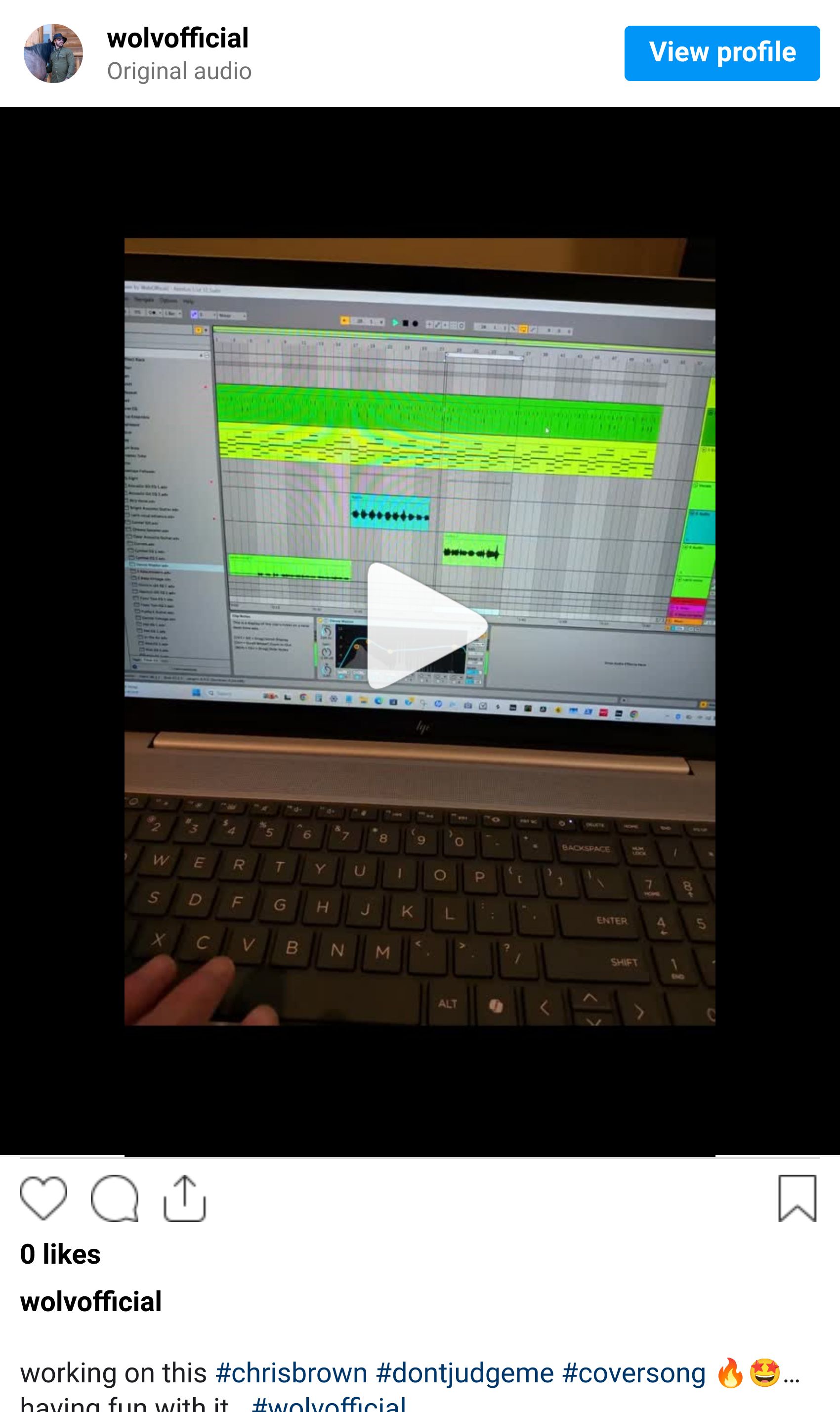
My first go at it sound cool and nice but definielty not a finished product.
Keywords:
Don't Judge Me Chris Brown cover 2026
Best Don't Judge Me covers
WolvOfficial Don't Judge Me
The 20-Year Evolution: Energy vs. Experience
There’s a specific kind of magic you have when you’re 16 years old sitting in front of a computer. I remember those days—using programs like Mixcraft, fueled by nothing but pure adrenaline and a desperate need to get my music "out there." Back then, I didn't care about phase cancellation, frequency masking, or sidechain compression. I just wanted the world to hear what I had to say, and I wanted it to happen fast.
Now, at 37, I’m looking at my production through a completely different lens. I still have that passion, but I’ve had to bridge the gap between youthful energy and mature experience.
The "Release Fast" Trap
When I was younger, I perceived speed as success. If I finished a song in a night, I felt like a pro. But looking back, I realize I didn't understand everything that actually goes into a song. I was missing the nuances of layering, the patience of a good vocal take, and the technical discipline required to make a track sit right in a mix.
Working on this Don’t Judge Me cover for 90 days has been my way of breaking that old habit. In the past, I would have rushed this out in 90 minutes. By waiting 90 days, I’ve allowed the song to evolve from a simple ballad into a pop-rock production that actually has weight.
Embracing the "Beginner’s Mindset"
It’s a strange feeling to be "experienced" yet feel like a "beginner" at the same time. Even though I’ve been doing this for over 20 years, I’m approaching Ableton with fresh eyes.
I’m finally admitting to myself: “I don’t know everything, and that’s okay.”
This mindset is actually what allowed me to have my recent breakthroughs with EQ and frequency ranges. Instead of pretending I had it all figured out, I downloaded a frequency chart. I studied where my bass-tenor voice actually lives (that 100 Hz to 5000 Hz pocket). I stopped fighting the software and started let it teach me.
The Lesson in the Layers
The "16-year-old me" would have been happy with one vocal track. The "37-year-old me" knows that to get that professional sheen, I need:
A solid, "dead-center" lead vocal.
Panned-out layers with stereo width.
Specific reverb tails that don't wash out the mix.
And of course, hearing the mix in MONO, before I ever submit.
It’s not just about the music anymore; it’s about the craftsmanship. I’ve realized that the energy gets people to listen, but the experience is what keeps them coming back.
What This Means for You
If you’re a creator struggling with your own timeline, know this: It’s okay to take your time. Whether you’re recording in a professional studio or a 400-square-foot transitional space like I am, the quality of your work is defined by your willingness to learn, not just your desire to finish.
If you enjoy listening to my Chris Brown cover, then you will likely enjoy this original song I wrote here below on Soundcloud.
The 400-Square-Foot Challenge: Producing in Transitional Spaces
We often see YouTube tutorials of producers in perfectly treated rooms with bass traps and mahogany desks. But my reality right now is a bit different. I’m currently living in transitional housing—about 300 to 400 square feet of space—getting back on my feet and preparing for my next chapter.
In a space like this, the room itself becomes an instrument you have to fight.
Fighting the "Parallel Wall" Reverb
Without the carpet I used to have, I’m dealing with sound bouncing everywhere. If you’ve ever recorded vocals in a small, bare room, you know the struggle: that "boxy" sound that no amount of digital magic can fully erase.
But here’s the breakthrough: Constraints breed creativity. Because I don't have a perfect vocal booth, I’ve had to become a "frequency ninja." I’ve had to learn exactly where my voice sits—that 100 Hz to 5000 Hz range—so I can carve out space in the mix to compensate for the room’s reflections.
I would like to additionally emphasize the importance of turning off all noise-making appliances, such as air conditioning units and fans, before you begin VOCAL recording. It is crucial to ensure that there is no background noise or sound
The "Carpet" Dream
It’s funny the things you look forward to when you’re leveling up your life. For some people, it’s a new car or a fancy watch. For me? It’s an apartment with carpet.
I’m excited to get back into my own place soon, not just for the stability, but for the natural acoustic treatment. Until then, I’m making it work with what I have. I’ve realized that the "vibe" of a song doesn't come from the expensive foam on the walls; it comes from the energy you put into the microphone.
Why the "Bedroom" Sound Matters

you can learn how to produce better music, keep on keeping on. others can teach you
There is a raw honesty in recording where you live. Whether you’re in a high-rise or transitional housing, the goal is the same: Making something out of nothing. Using sidechain compression to make my drums punch through the "room noise" or using Ableton to consolidate messy takes into a clean professional vocal stack—these are the skills that stay with you regardless of where you're living. I’m not just building a cover song; I’m building a workflow that will follow me into my new apartment and beyond.
This 90-day journey on "Don’t Judge Me" hasn't just been about a Chris Brown cover. It’s been a mirror for my own life. It’s been about:
Patience: Waiting for the right "pop-rock" energy instead of rushing a ballad.
Technicality: Moving from "guessing" to "knowing" my EQ and frequencies.
Resilience: Making professional-grade music in a transitional space. (REMINDS me of when I would record vocals inside of my vehicle during college.)
Music production is a fascinating subject because it never ends. There is always a new "breakthrough" around the corner, a new way to make a kick drum shine, or a new way to layer a vocal. And honestly? I wouldn't have it any other way.